



Skip to content

    Wild Windows · Giant Panda

    Giant Panda

    Ailuropoda melanoleuca

    ← All species
    VUVulnerableAlso known as: Bamboo Bear, Great Panda, meaning large bear cat, Panda Bear, Parti-colored Bear

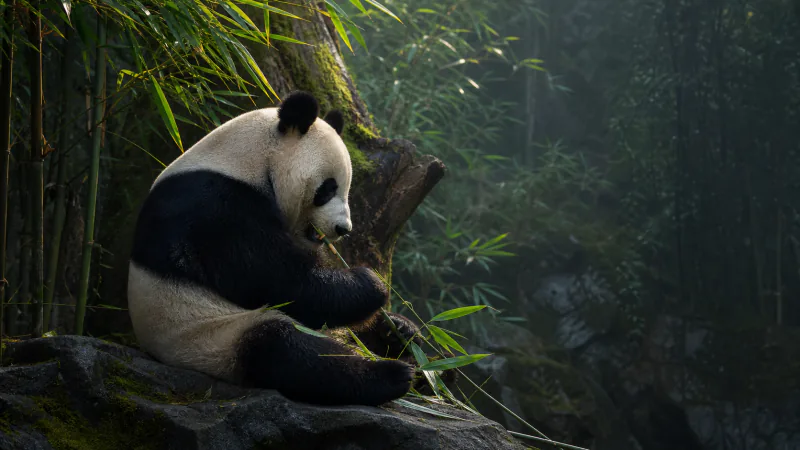
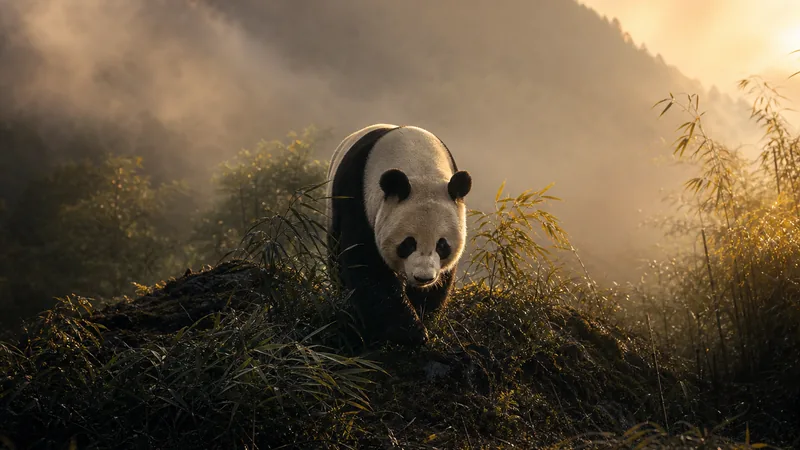
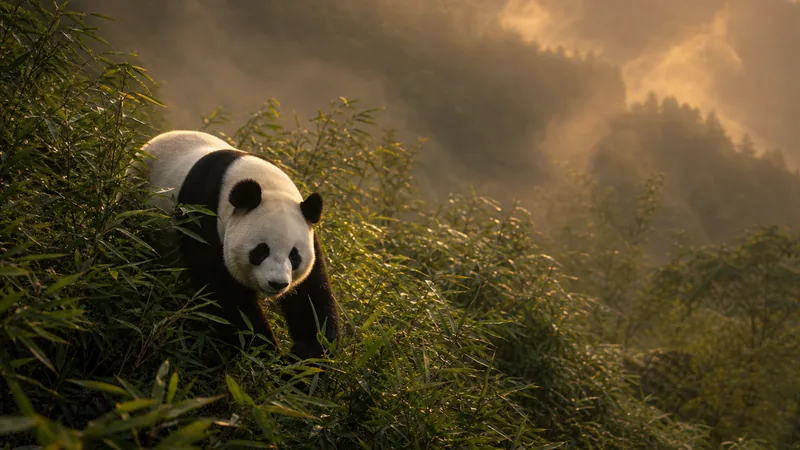
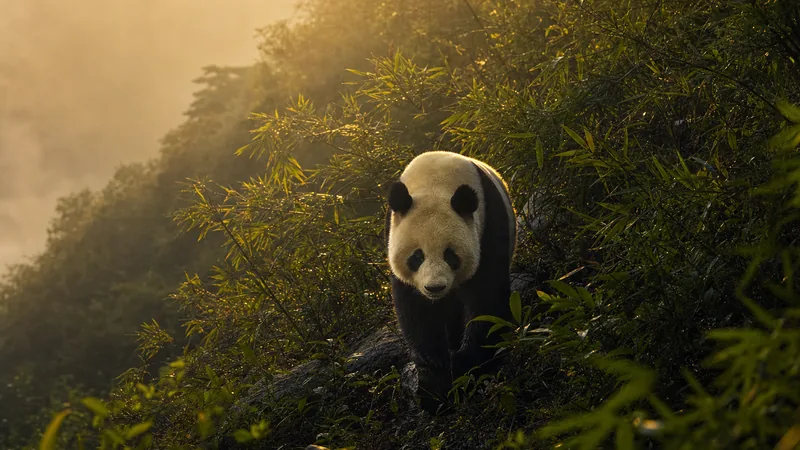
    A bear native to the mountains of central China, instantly recognizable for its bold black-and-white coat and gentle disposition. Once Critically Endangered, the giant panda was reclassified to Vulnerable in 2016 after decades of conservation effort produced measurable population recovery.

    Natural History

    Habitat

    Bamboo forests in the mountainous regions of Sichuan, Shaanxi, and Gansu provinces in China, between roughly 1,500 and 3,000 meters elevation.

    Diet

    Almost exclusively bamboo — up to 38 kg per day — supplemented occasionally with eggs, small mammals, or carrion.

    Lifespan

    About 20 years in the wild; up to 30 years in human care.

    Behavior

    Largely solitary outside of breeding season. Communicates through scent marking and vocalizations including bleats, honks, and chirps.

    Classroom Facts

    • Pandas spend 10 to 16 hours a day eating bamboo.
    • A panda's wrist bone has evolved into a "thumb" that helps it grip bamboo.
    • Cubs are born pink, blind, and only about 100 grams — smaller than a stick of butter.

    Live Cameras

    8 giant panda cameras in the catalog.

    Each listing shows its current source, permission, and playback-verification state.

    Use This With

    Free classroom resources for giant panda.

    Printable, photocopy-friendly, designed by educators. Pair them with any cam featuring this species.

    Ethogram

    Behavior Observation Ethogram — Mammal Edition

    Research-style ethogram for grades 6–12. Two pages: definitions of 12 mammal behaviors, plus a 30-minute one-zero observation log students fill in during a cam watch. Compatible with our giant panda, African elephant, sea otter, African lion, polar bear, mountain gorilla, and red panda pages.

    Grades
    6-8, 9-12
    Duration
    45 min
    Subjects
    biology, ecology, data_collection
    Download PDF
    Species Card

    Species ID Cards — Mammals

    A printable deck of illustrated identification cards for the mammals featured across Wild Windows cams — common name, scientific name, conservation status, range, and a standout fact. Cut them out for a sorting activity or a matching game.

    Grades
    3-5, 6-8
    Duration
    20 min
    Subjects
    biology, ecology
    Download PDF