Skip to content

    Wild Windows · Mountain Gorilla

    Mountain Gorilla

    Gorilla beringei beringei

    ← All species
    ENEndangeredAlso known as: Mountain Gorilla, Mountain_gorilla

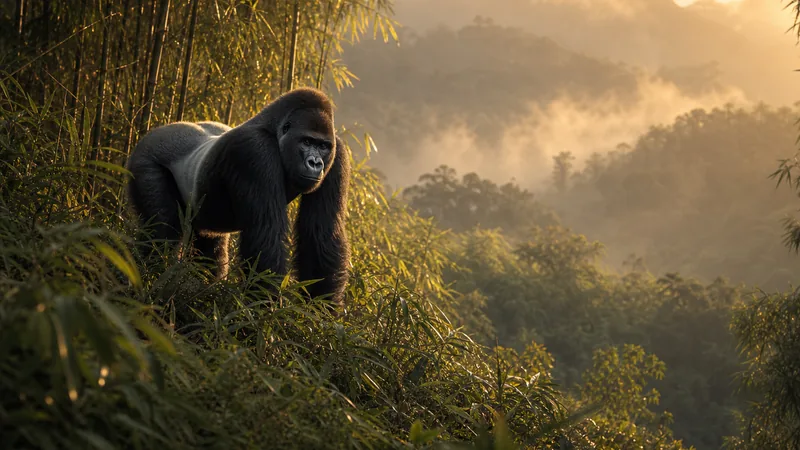
    A subspecies of eastern gorilla found in only two populations: the Virunga Mountains spanning Rwanda, Uganda, and the Democratic Republic of the Congo, and the Bwindi Impenetrable Forest in Uganda. Once predicted to be extinct by the turn of the century, mountain gorillas have rebounded to over 1,000 individuals.

    Natural History

    Habitat

    Montane and bamboo forests at elevations of 2,200 to 4,300 meters in the Virunga Mountains and Bwindi.

    Diet

    Herbivore: bamboo shoots, wild celery, leaves, stems, and occasionally insects.

    Lifespan

    35 to 40 years in the wild.

    Behavior

    Live in family groups led by a dominant silverback male. Build new nests of vegetation every night. Use a wide range of vocalizations and gestures to communicate.

    Classroom Facts

    • Mountain gorillas share about 98% of their DNA with humans.
    • They sing or hum while they eat their favorite foods.
    • Their populations are recovering — but only barely. There are fewer than 1,100 individuals in the wild.

    Use This With

    Free classroom resources for mountain gorilla.

    Printable, photocopy-friendly, designed by educators. Pair them with any cam featuring this species.

    Ethogram

    Behavior Observation Ethogram — Mammal Edition

    Research-style ethogram for grades 6–12. Two pages: definitions of 12 mammal behaviors, plus a 30-minute one-zero observation log students fill in during a cam watch. Compatible with our giant panda, African elephant, sea otter, African lion, polar bear, mountain gorilla, and red panda pages.

    Grades
    6-8, 9-12
    Duration
    45 min
    Subjects
    biology, ecology, data_collection
    Download PDF
    Species Card

    Species ID Cards — Mammals

    A printable deck of illustrated identification cards for the mammals featured across Wild Windows cams — common name, scientific name, conservation status, range, and a standout fact. Cut them out for a sorting activity or a matching game.

    Grades
    3-5, 6-8
    Duration
    20 min
    Subjects
    biology, ecology
    Download PDF